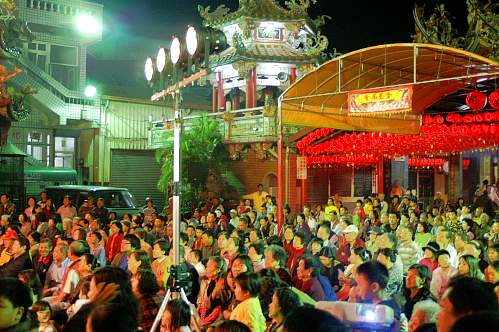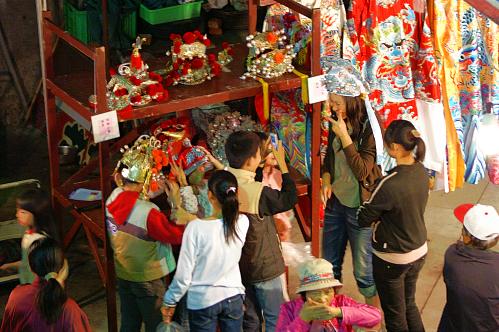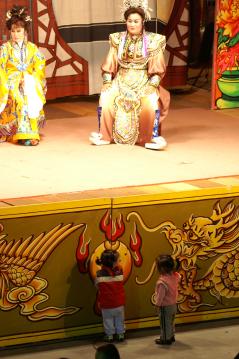
As far as I can remember, I had not seen any Hakka opera until last Saturday at the so-called Harvest Show (收冬戲) in my hometown Jhuolan (卓蘭), although I am one hundred percent of Hakka descent. The Harvest Show used to be the ocassion for farmers to express their gratitude to Gods for the harvest in the past year. It was also an opportunity for people to relax after all the hard work. Of course, the Harvest Show is no longer a religious ritual in the 21st century. Last Saturday’s play was sponsored by the Council of Hakka Affairs.
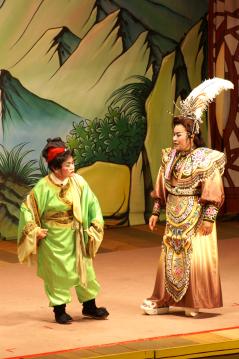
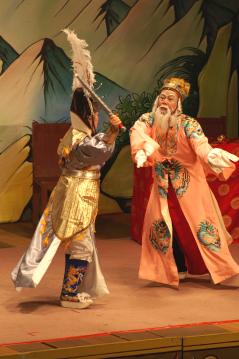
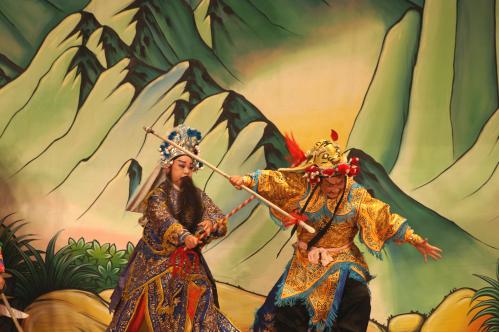
Like Taiwanese operas (歌仔戲), the plots of Hakka operas are usually based on Chinese history. But because the Hakka opera has not drawn as much attention as the Taiwan opera has, it has difficulty recruiting new blood. Consequently, actors in Taiwan’s Hakka operas tend to be much older, as can be seen in the following photos.
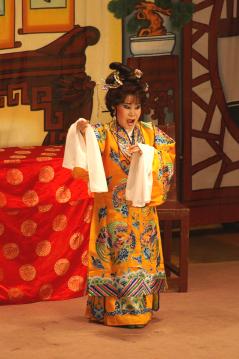
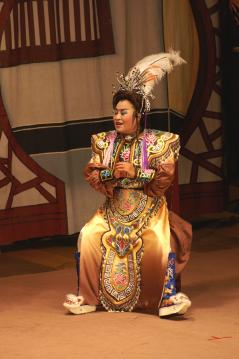 The leading role, Chao Kuang-Yin (趙匡胤, the founder of Sung Dynasty), though a male character, was played by an actress.
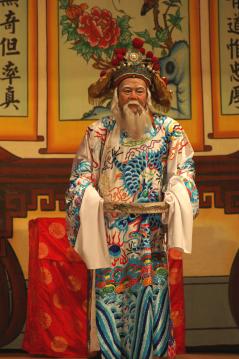
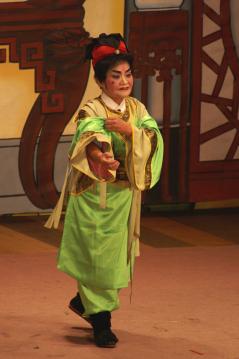 Comic characters are a must in either Hakka opera or Taiwanese opera. This male servant character was actually played by an actress. She spoke not only Hakka but also English and Mandarin during the play!
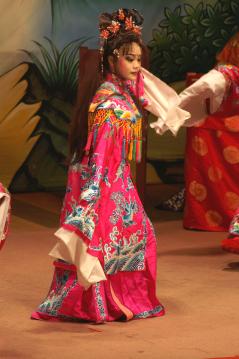
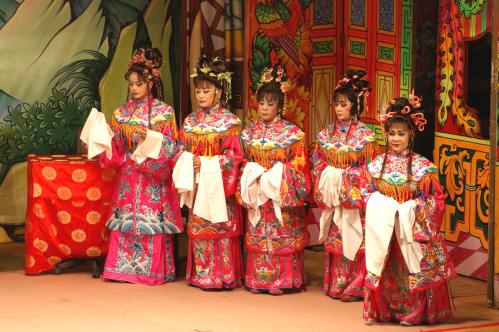 Believe it or not, these women are the bad guys in the play.
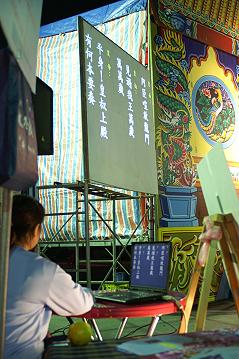 When tradition meets technology: A laptop and an LCD projector were used to project the subtitles onto the screen by the side of the stage. Had there not been the subtitles, I would have had much difficulty understanding what was on the stage.